Ice Heave Damage Fixed With a Full Lakeside Shoreline Restoration
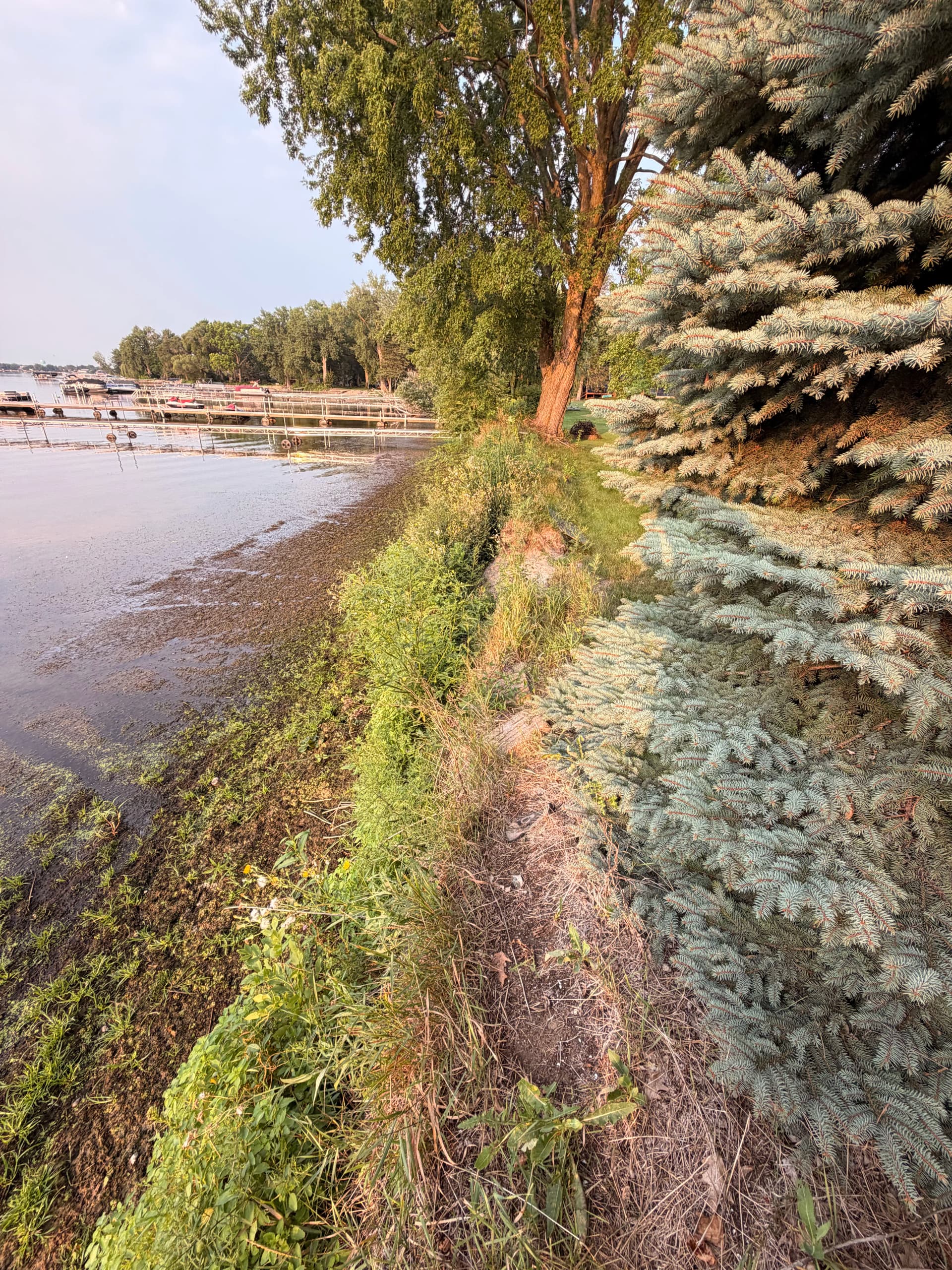
Ice heave is one of the sneakiest ways a shoreline can fall apart. The freeze-thaw cycle works against the bank all winter long, and by spring you're left with a crumbling edge, exposed soil, and a real erosion problem on your hands. That's exactly what we were dealing with here.
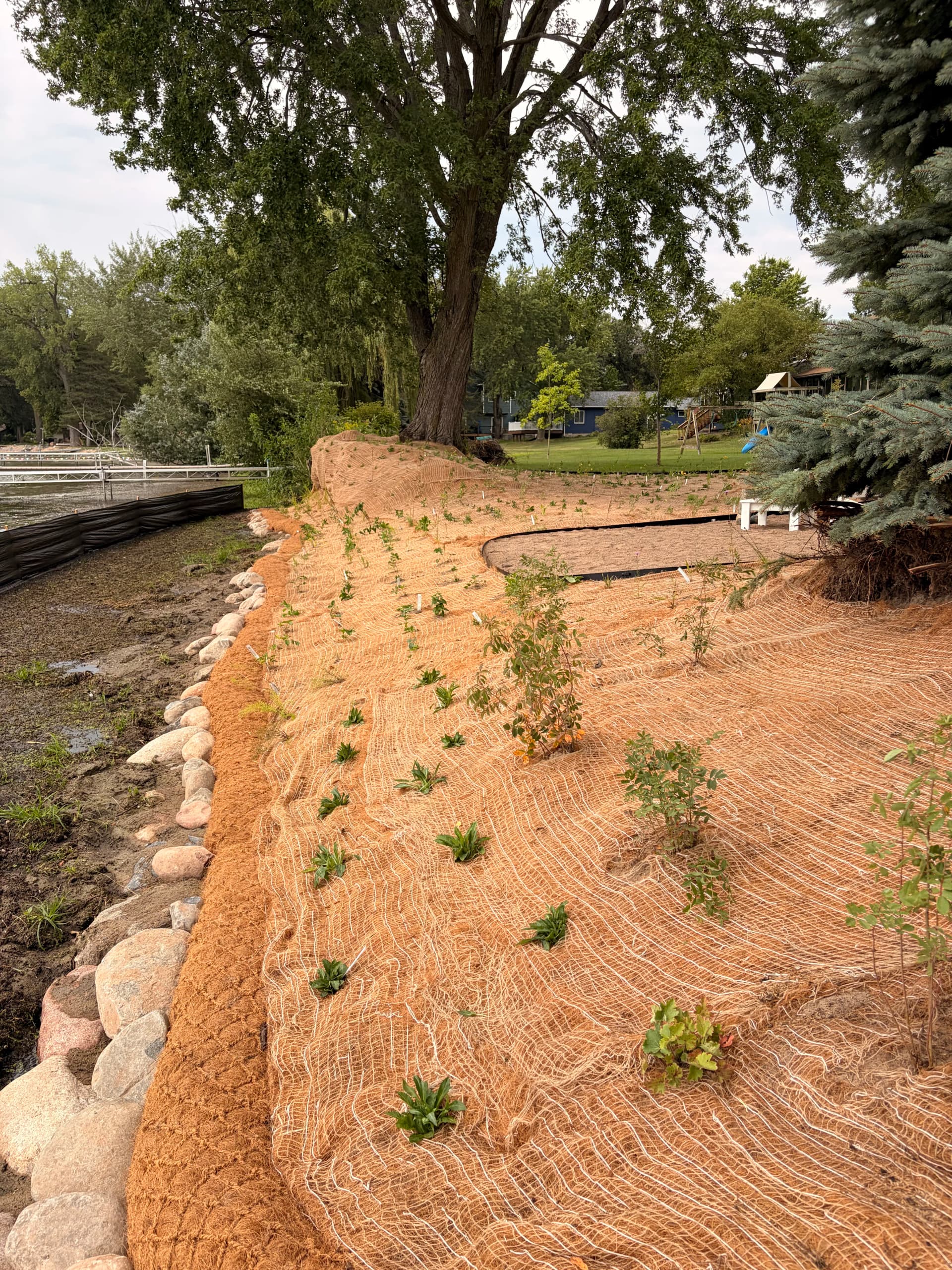
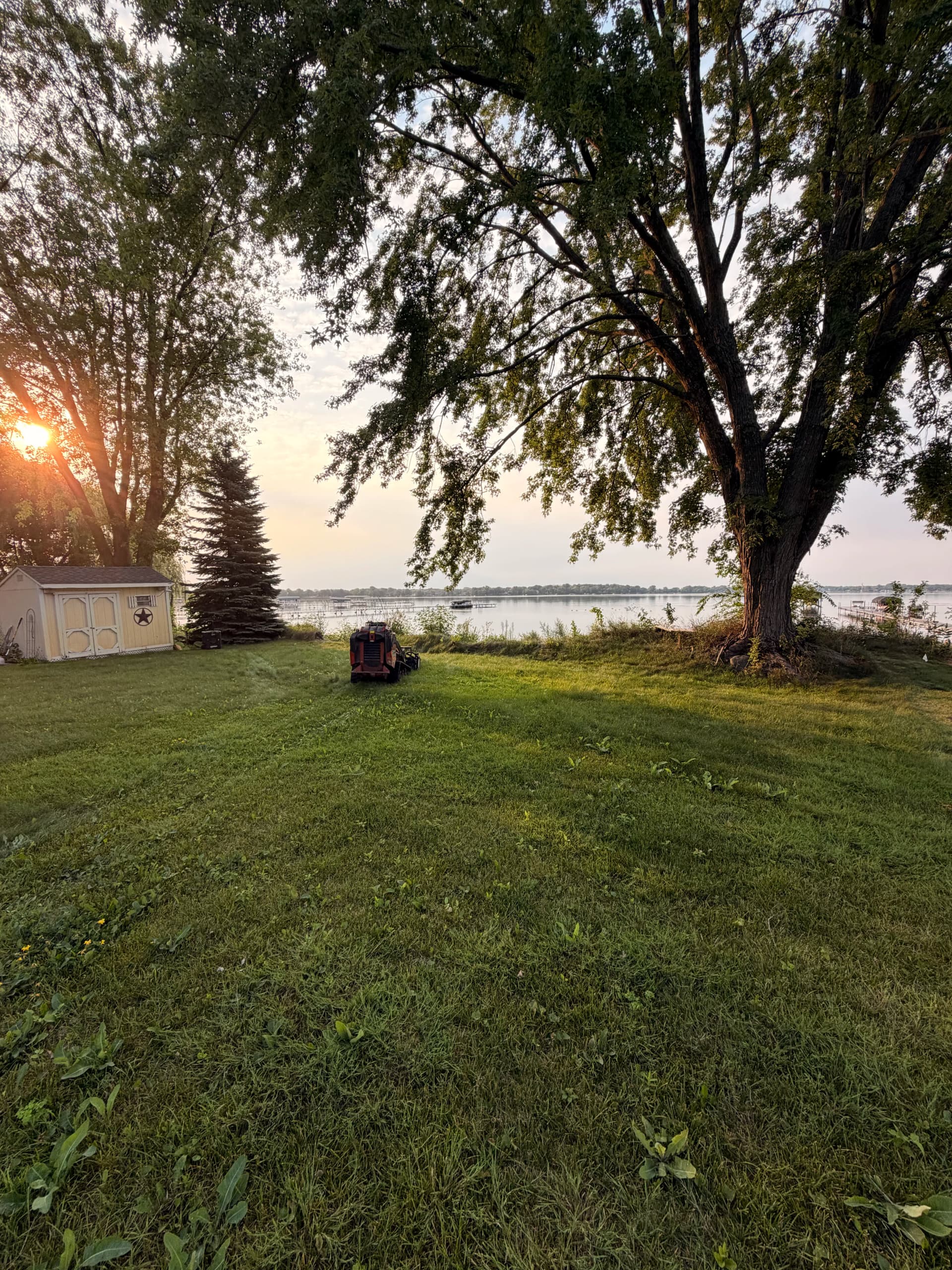
Before we could do anything, we had to strip the bank down and understand what we were working with. The existing shoreline had lost its structure - bare, sloughing soil with no meaningful root system holding it together. We also had a large, established maple on the property that the homeowner really wanted to keep. So we planned around it. Saving a mature tree like that isn't always easy during a full bank rebuild, but it's absolutely worth the extra effort.
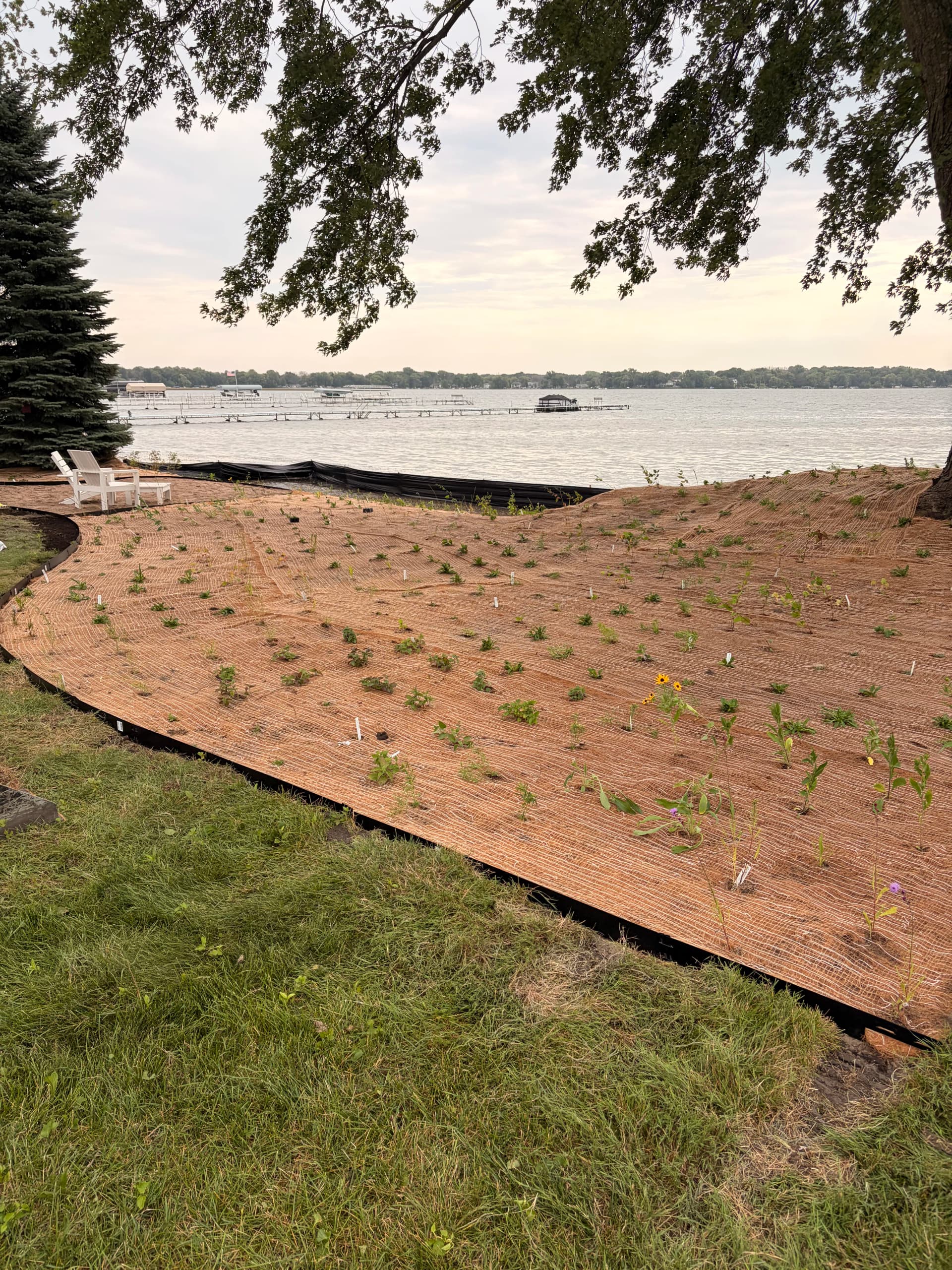
Here's how we approached it. We started by establishing a solid toe line along the water's edge using natural stone - that's the rock you see lining the base of the bank. The toe is what anchors the whole system and takes the brunt of wave energy. From there, we layered in coir erosion control matting across the face of the slope. Coir is a natural coconut fiber material that holds the soil in place while the plants get established. It breaks down over time as the root systems take over - no synthetic materials left behind.
Then came the planting. Over 800 native plants went into this bank. Native species are the right call for shoreline work because their root systems go deep, they're built for the local climate, and they do something no riprap or seawall can do on its own - they filter runoff before it hits the lake. Cleaner water, stronger bank, and a shoreline that actually functions the way it should.
If your shoreline is showing signs of erosion - slumping edges, exposed roots, bare soil near the water - fall is actually a smart time to get a plan together. Native plantings establish well going into dormancy, and getting ahead of another freeze-thaw cycle can make a real difference come spring.