Ice-Damaged Shoreline Rebuilt With Riprap the Right Way
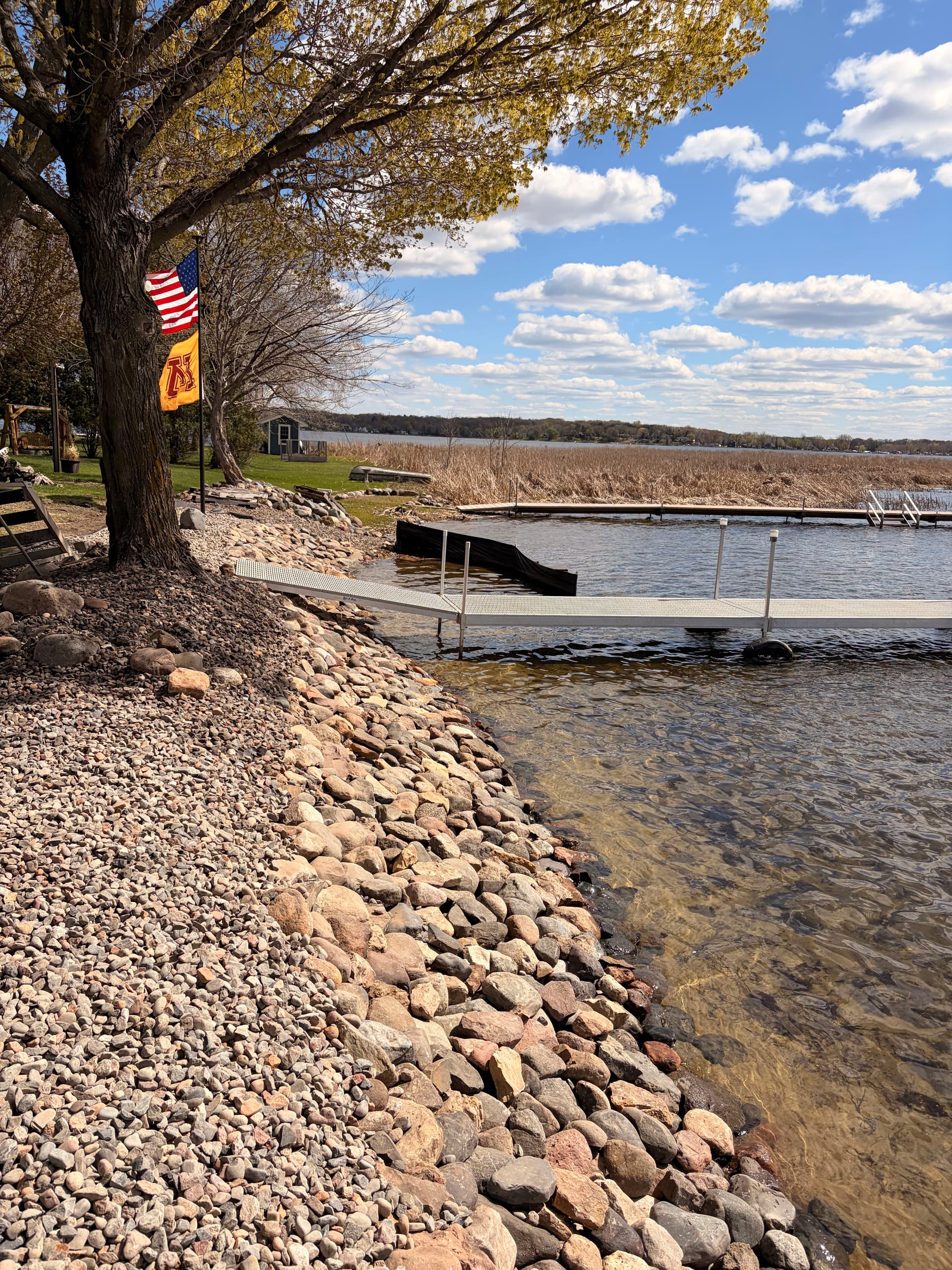
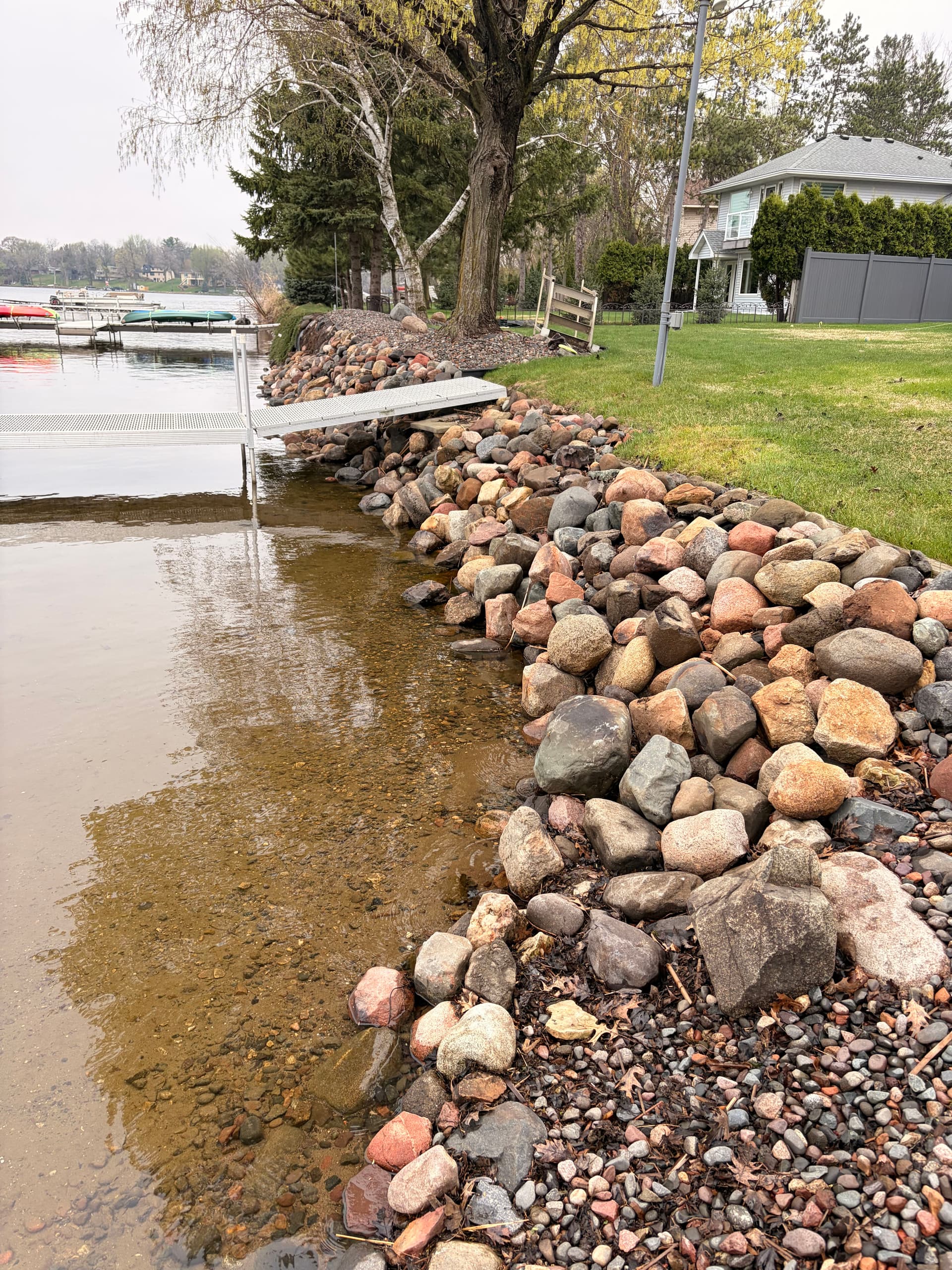
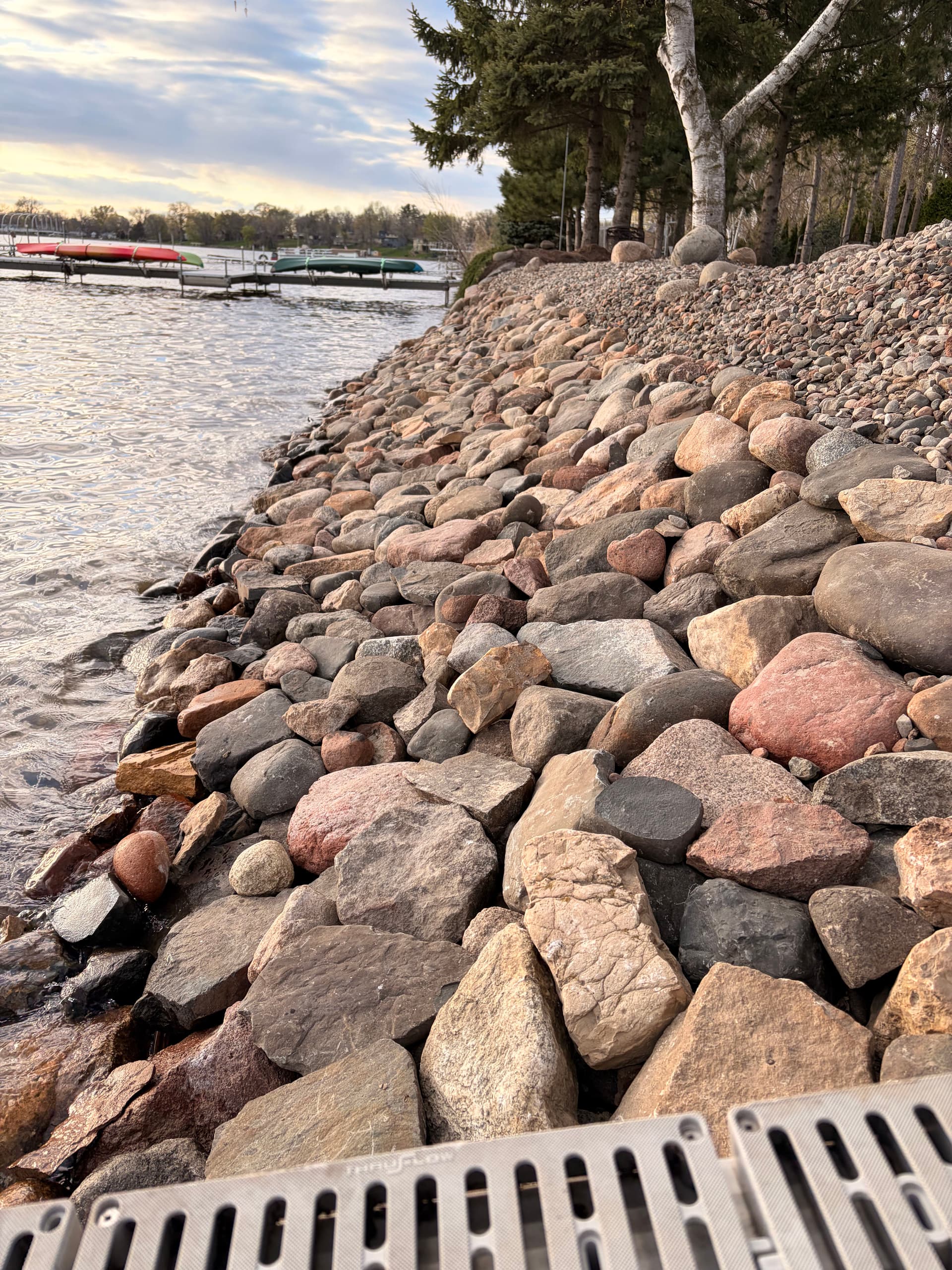
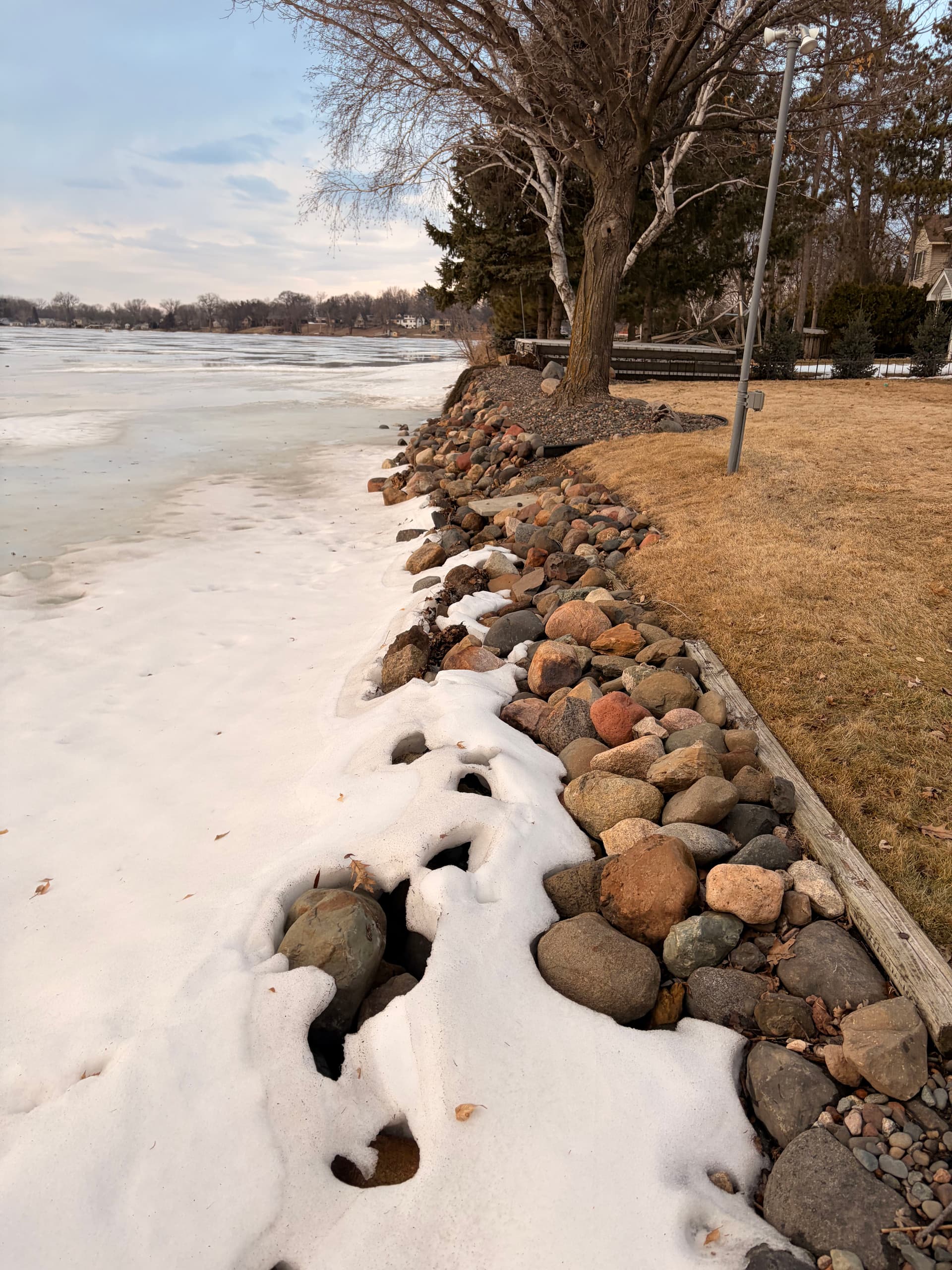
Ice is one of the most destructive forces a shoreline can face. It expands, shifts, and heaves rocks out of place over an entire winter - and by the time the ice melts, what was once a solid, stable bank can look like a scattered mess. That's exactly what we were dealing with here. Rocks pushed out of position, voids opening up along the waterline, and a bank that had clearly lost its structure.
The before condition tells the story pretty clearly. Stones heaved and scattered, gaps forming at the water's edge, and a shoreline that wasn't going to hold up through another season of wave action and fluctuating water levels. Left alone, that kind of erosion compounds fast. What starts as a few displaced rocks can turn into a significantly undercut bank.
We went in and rebuilt it properly. That means regrading the bank, getting the base material right, and placing riprap in a way that actually interlocks and holds. Riprap done well isn't just rocks dumped on a slope - it's a layered, intentional system that absorbs wave energy and keeps the soil behind it from washing out. The finished bank is tight, clean, and graded to shed water correctly.
Shoreline restoration work like this isn't just about looks, though the results do speak for themselves. It's about protecting the property behind it. A failing bank threatens your lawn, your dock access, and over time, your land itself. Getting ahead of it while the damage is still manageable is always the smarter call.
If your waterfront came through winter looking rough - shifting stones, soft spots, or areas where the bank has started to pull away - it's worth taking a closer look before the water warms up and wave season kicks back in. These things rarely fix themselves.