Engineered Riprap Shoreline Restoration in Grand Rapids MN
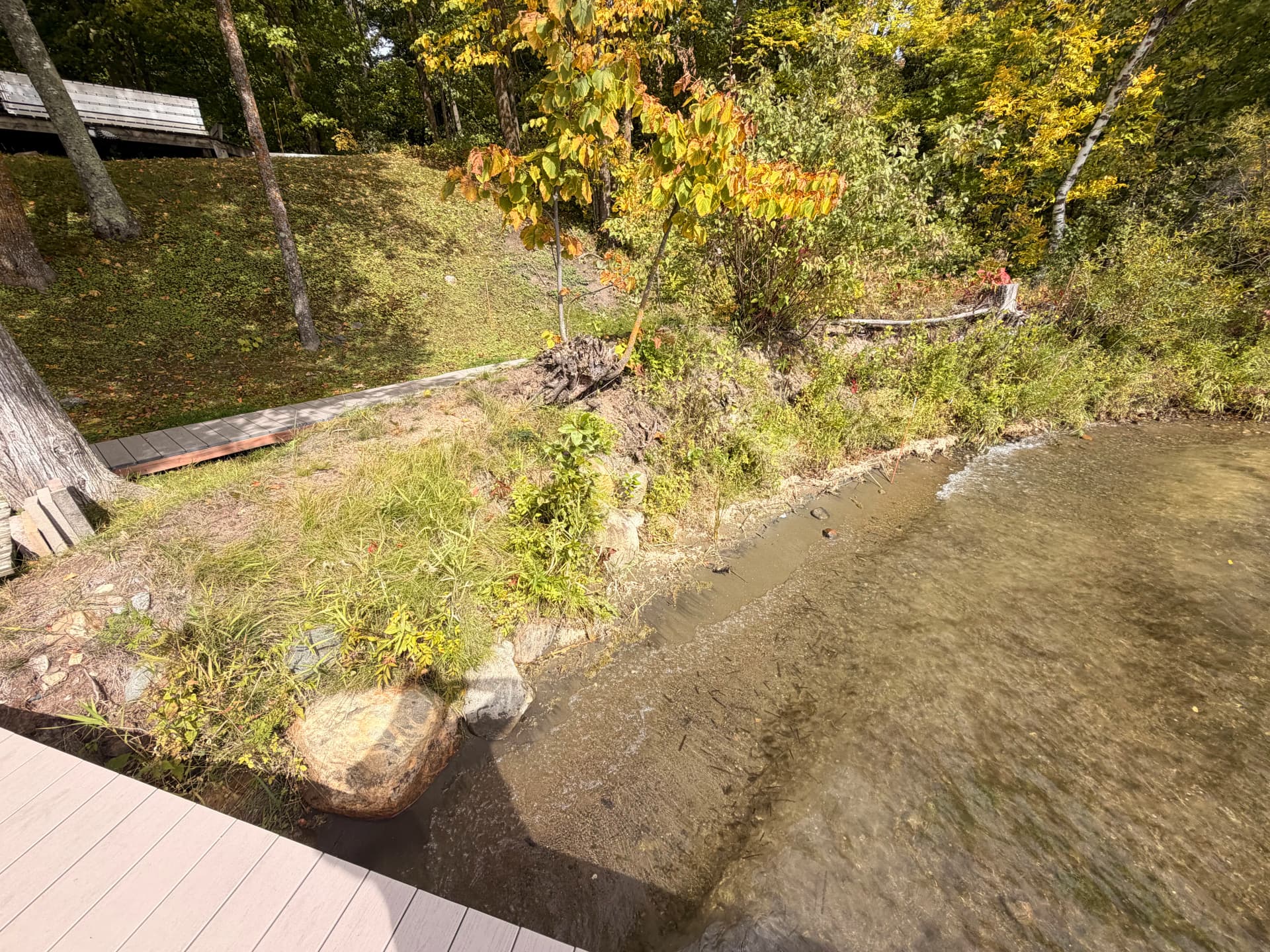
Shoreline erosion is one of those problems that sneaks up on you. One season the bank looks a little rough. The next, you're watching your property wash into the lake. That's exactly what was happening here - an unprotected, deteriorating bank with loose rock and overgrown vegetation getting battered by wave action every time the wind picked up.
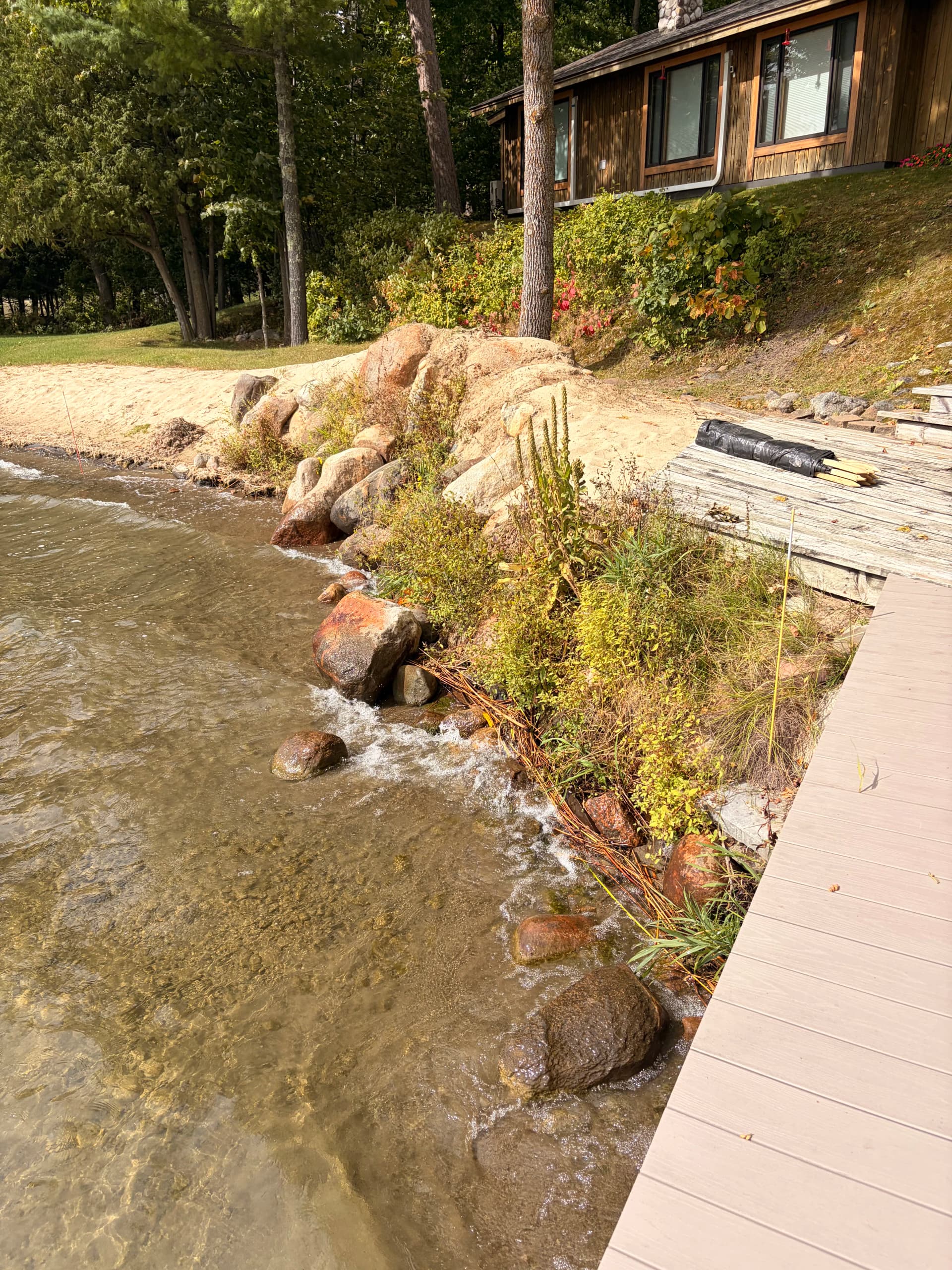
Here's what we were working with before we started: a crumbling bank edge, scattered rocks with no real structure holding them in place, and soil that was actively eroding right into the water. Not a great situation for a lakeshore property. The fix needed to be engineered, not just cosmetic.
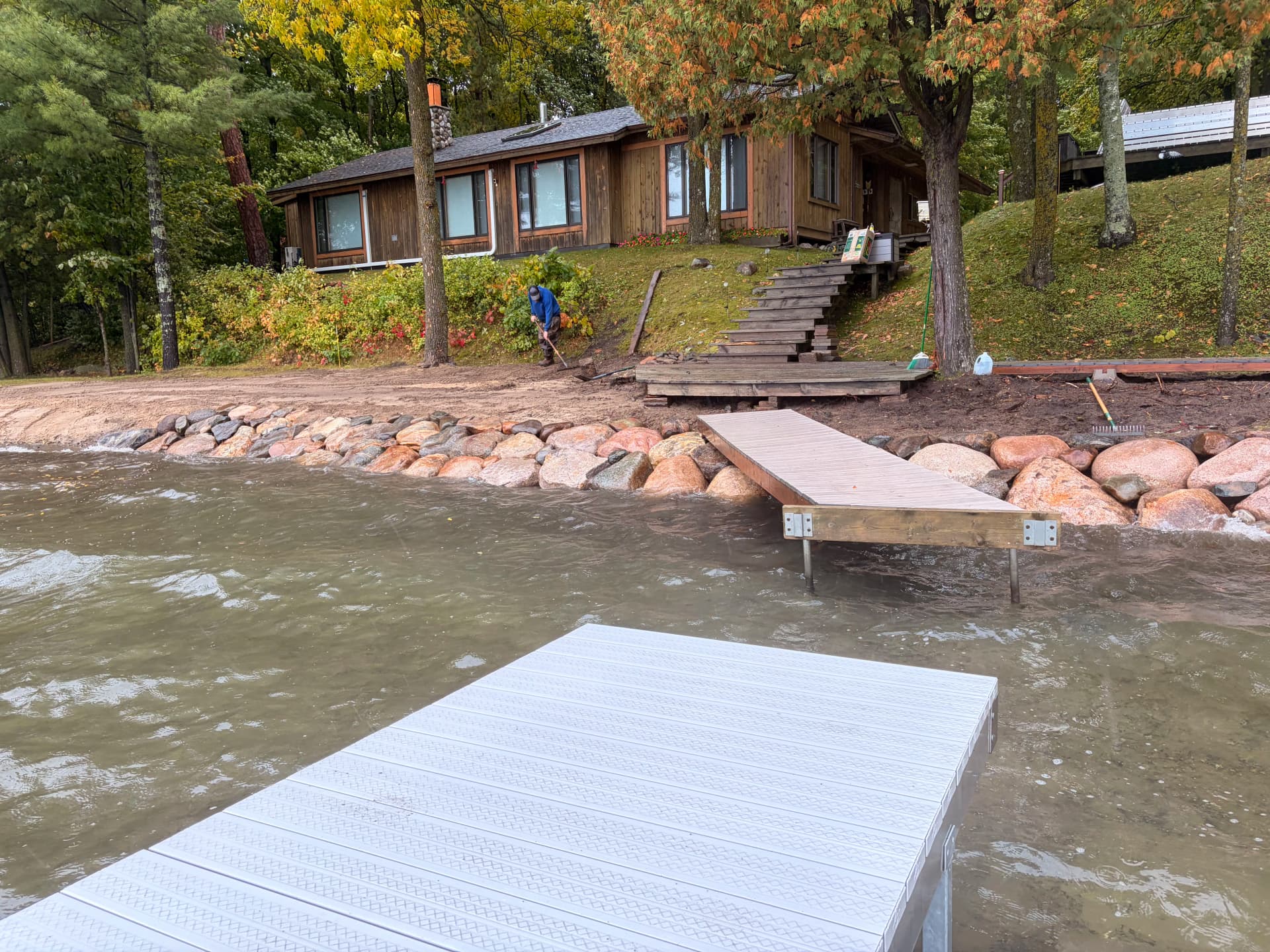
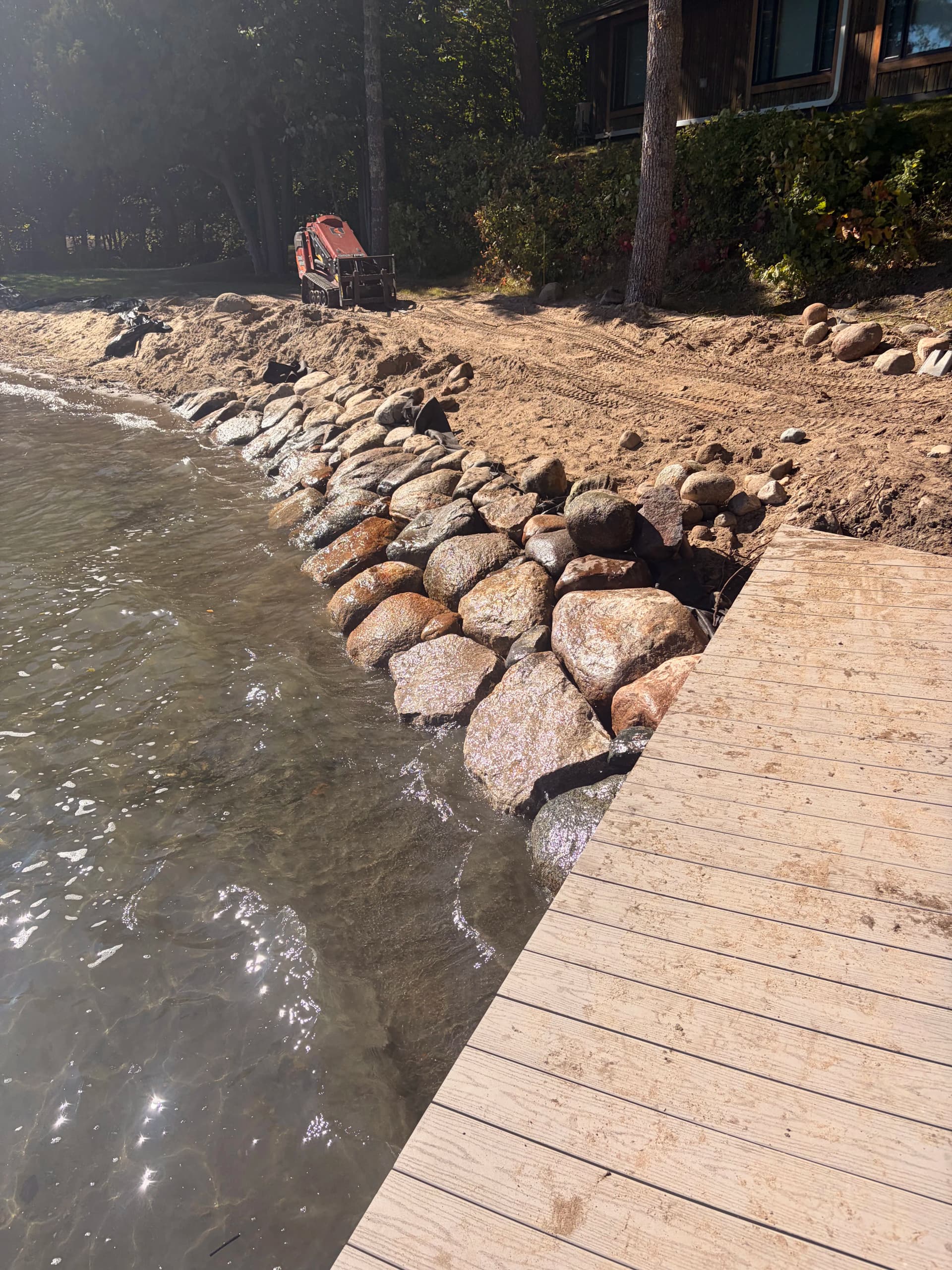
We installed an engineered riprap system along the bank - large, tightly placed natural boulders set to absorb and deflect wave energy instead of letting it chew through the soil. The key with riprap like this isn't just throwing rocks along the water's edge. It's about placement, sizing, and making sure the base is prepped correctly so the stones don't shift or sink under pressure over time. Done right, it holds the bank in place while still looking natural - like it belongs there.
The finished bank runs clean and consistent from the dock all the way down the shoreline. The boulders are fitted tight together with good coverage at the waterline, which is where the real erosion damage happens. The property still has that natural lake feel - it doesn't look like a wall, it looks like a protected shoreline.
Fall is actually a solid time to tackle this kind of work. Water levels tend to drop, conditions are manageable, and getting it done before winter means your bank is protected heading into ice-out and spring runoff - two of the roughest times of year for an exposed shoreline. If your lakeshore is starting to show signs of erosion, don't wait for it to get worse.