Ice Heaving
Explaining Ice Heaving
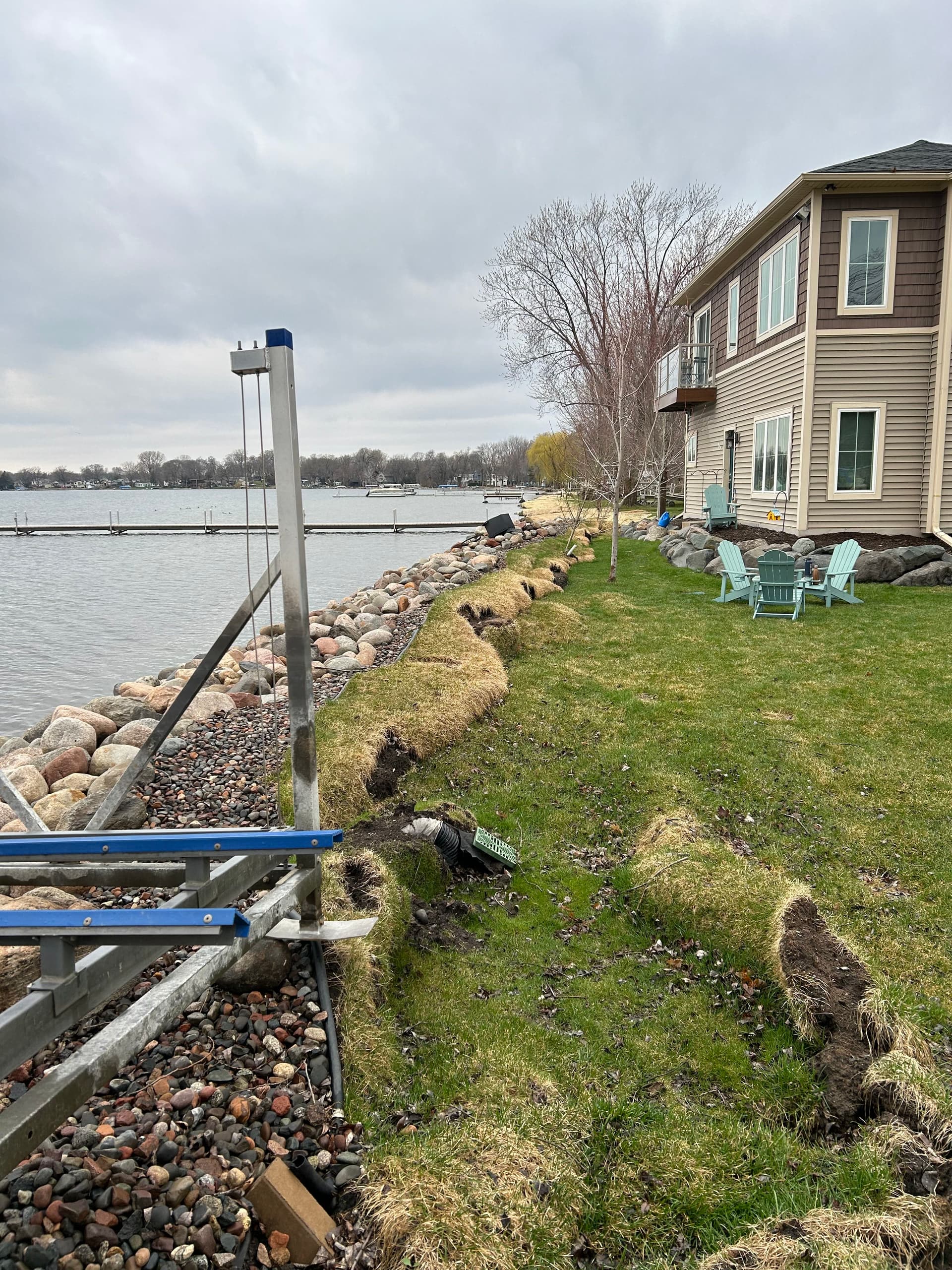
Understanding Ice Heaving: How It Forms and Damages Lakefront Properties in Minnesota and Wisconsin
When winter grips the Upper Midwest, lakes across Minnesota and Wisconsin freeze into solid sheets of ice. For most residents, this marks the season of snowmobiles, ice fishing, and peaceful frozen landscapes. But for lakefront property owners, the freeze can bring an unwelcome guest — ice heaving, a natural but destructive process that can crack foundations, rip apart shorelines, and ruin landscaping.
Let’s explore what ice heaving is, how it forms, and what homeowners can do to reduce its impact.
What Is Ice Heaving?
Ice heaving occurs when expanding lake ice pushes against the shoreline, exerting enormous pressure on anything in its path. As temperatures fluctuate throughout the winter and early spring, the ice sheet on a frozen lake doesn’t remain static — it expands and contracts.
When expansion occurs and the ice has no place to go, the pressure is directed laterally (sideways) toward the shore. This force can push rocks, soil, decks, and even retaining walls upward or inland, leading to damage that often appears suddenly once the snow begins to melt.
How Ice Heaving Forms
Ice heaving results from a combination of temperature, wind, and water level conditions that act together over the season. Here’s a breakdown of what typically happens:
Initial Freeze and Anchoring
As winter begins, lakes freeze from the shoreline outward. The ice forms first along the edges, locking onto the land before the rest of the lake surface solidifies. This shoreline attachment creates a rigid, unmoving anchor for the growing ice sheet.Thermal Expansion and Contraction
Ice, like most materials, expands when warmed and contracts when cooled. Even small temperature changes — just a few degrees — can cause significant movement across a large lake.On sunny or mild winter days, the top layers of ice warm slightly and expand.
At night, when temperatures drop, they contract.
Each daily cycle places stress on the ice and on the points where it is anchored to the shore.
Wind and Wave Action
Strong winds can shift large ice sheets, stressing the areas where ice remains attached to land. Cracks form, and when the sheets collide or press against immovable sections, they can push chunks of ice upward or onto shorelines in a process sometimes called ice ridging or ice jacking.Rising Water Levels and Spring Thaw
As ice begins to melt in spring, warmer water flows beneath it, loosening shoreline ice and causing movement. Rising water levels can lift the ice and force it against embankments, seawalls, and landscaping features — compounding the pressure and damage.
How Ice Heaving Damages Lakefront Properties
The forces generated by ice movement are surprisingly powerful — in some cases exceeding tens of thousands of pounds per square foot. For homeowners, the results can be costly and unsightly.
Common types of damage include:
Cracked or Uplifted Retaining Walls: Concrete and stone barriers often buckle or tilt when ice pushes directly against them.
Shoreline Erosion: The churning, breaking ice scrapes away soil and vegetation, destabilizing the shoreline.
Damaged Decks, Docks, and Boat Lifts: Ice sheets can catch beneath fixed structures, lifting or bending them as the ice moves.
Landscape Destruction: Lawns, pathways, trees, and decorative stones along the water’s edge are frequently torn apart or shoved inland.
Why It’s Especially Common in Minnesota and Wisconsin
Minnesota and Wisconsin have perfect conditions for ice heaving:
Thousands of small and medium-sized lakes that freeze solidly each winter
Wide temperature swings — even within 24 hours
Prevailing winter winds that move ice across lake surfaces
Repeated freeze-thaw cycles lasting months
These states also see significant shoreline development, meaning more structures sit within the reach of moving ice.
How Homeowners Can Reduce Damage
While you can’t stop Mother Nature, there are ways to minimize the effects of ice heaving:
Maintain a Gentle Shoreline Slope:
A gradual incline allows ice to rise and fall with less pressure against the land.Avoid Rigid Structures Right at the Waterline:
Instead of concrete seawalls or fixed decks, consider flexible or removable dock systems.Use Riprap (Loose Rock Barriers):
Layers of rock absorb and distribute the pressure from expanding ice more effectively than solid walls.Monitor Water Levels and Ice Conditions:
Being aware of unusual thaws or rapid freezes can help you anticipate when heaving might occur.Consult Shoreline Restoration Experts:
Canvasback Outdoor Services can come out, and create a detailed plan to remove the ice heave. And mitigate any future occurrences.
In Summary
Ice heaving is a natural product of cold-weather dynamics — a cycle of freezing, expansion, and movement that reshapes shorelines every winter. For property owners in Minnesota and Wisconsin, understanding what drives this phenomenon is the first step to protecting their investment.
Through proper shoreline design, routine inspection, and adaptive strategies, homeowners can preserve their lakefront beauty while coexisting with the forces of the northern winter.
Ice heaving in Minnesota
Ice heaving in Wisconsin
Lakefront erosion protection